IBM Acquisitions · Carbon Migration
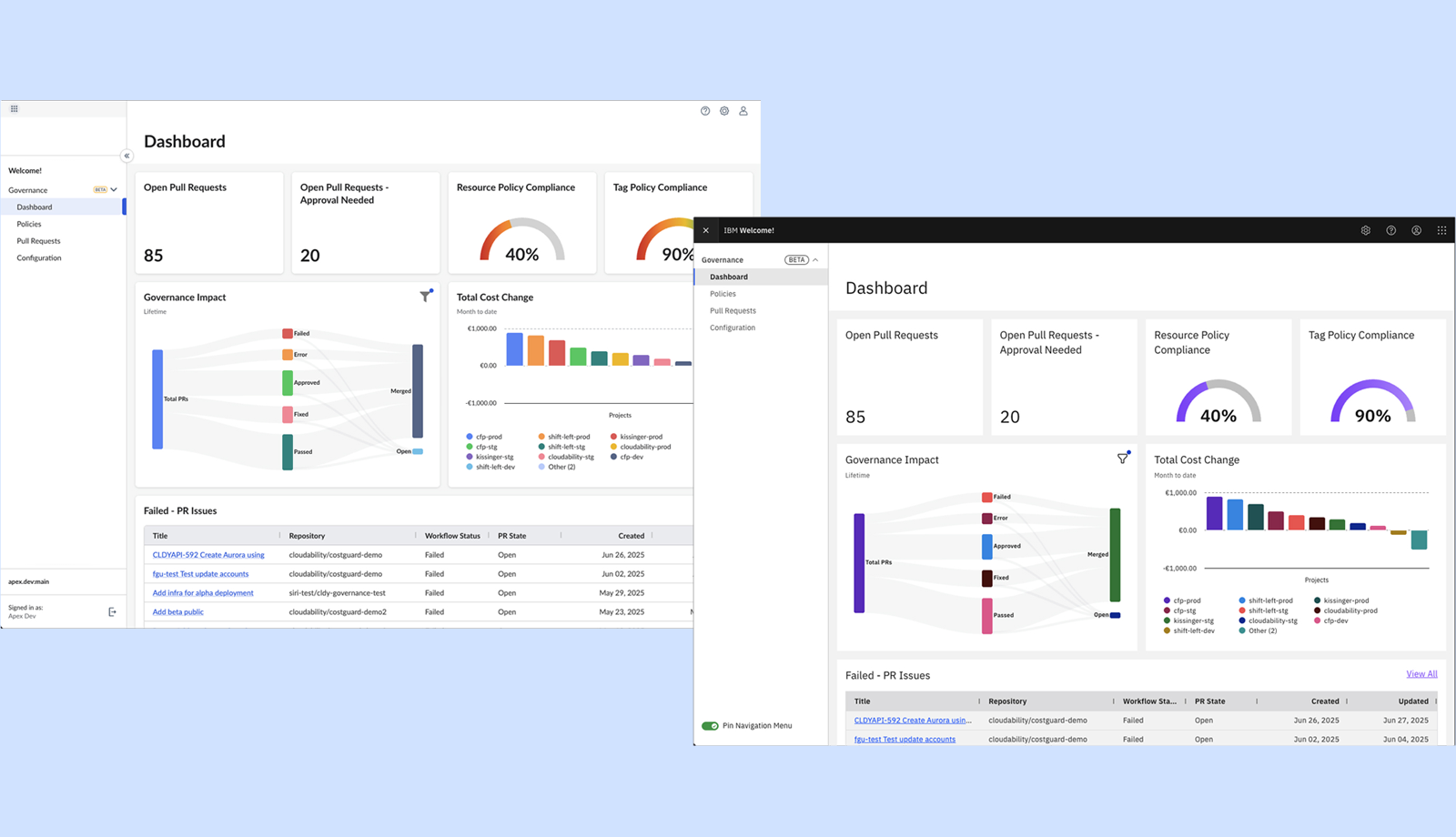
Led the technical strategy for standardizing how IBM brings newly acquired products into the Carbon Design System ecosystem. Created a data-driven assessment framework and embedded collaboration model that transformed ad-hoc migrations into a predictable, scalable process. The approach balanced speed with quality, enabling teams to achieve visual consistency quickly while planning comprehensive component adoption over time.
Summary
As Development Lead, helped create IBM's first systematic approach to migrating acquired products onto Carbon Design System. Collaborated with the team to build a repeatable framework combining technical assessment, interactive effort modeling, and embedded partnership that reduced migration timelines by 40% while maintaining product velocity. The program now serves as IBM's standard for acquisition onboarding, with the sizing methodology adopted across 8+ product teams.
Background
The Challenge: IBM's acquisition strategy accelerated, but each new product brought unique design languages, tech stacks, and user expectations. Without a systematic approach, migrations were inconsistent and time-consuming, creating fragmented user experiences and straining both acquisition teams and the Carbon team.
My Role: As Development Lead, I owned the technical strategy and delivery methodology, working directly with product teams, Carbon designers, and engineering leadership to define and execute the program.
Approach
1. Technical Discovery & Assessment: Working with the team to understand what made migrations successful or challenging across different product contexts.
Technical Discovery Process:
- Asset Audit: Worked with acquisition teams to conduct full component inventories across their Figma files and codebases
- Accessibility Baseline: Collaborated to establish comprehensive a11y audits covering keyboard navigation, color contrast, and semantic markup
- Parity Mapping: Mapped existing product components to Carbon equivalents, identifying what could translate directly and what needed adaptation
2. Interactive Sizing Model: The breakthrough was making effort estimation collaborative and transparent. I built an interactive model that:
- Weighted complexity factors: Component usage frequency, technical debt, accessibility gaps, and design divergence
- Factored team capacity: Available developers, existing Carbon knowledge, and concurrent feature work
- Generated staged timelines: Prioritized high-impact, low-risk changes first, with heavier architectural shifts sequenced later
3. Embedded Partnership Strategy: Rather than consulting from the sidelines, we embedded Carbon experts directly with product teams through "away missions":
- Close collaboration between Carbon developers and product engineers throughout the migration
- Design reviews with both teams present to align on component decisions
- Staged delivery where teams shipped improvements in phases rather than waiting for complete migration
Challenges
Technical Complexity: Products varied from React to Angular to vanilla JavaScript, each with different state management and styling approaches. The biggest challenge was preserving existing user workflows while updating the underlying components.
Solution: Created a "styling-first" approach for high-risk areas. Teams could achieve visual consistency using Carbon tokens without immediately replacing components, reducing regression risk while buying time for proper component swaps.
Organizational Resistance: Many teams had invested heavily in custom design systems and questioned the value of migration. Some saw Carbon as additional complexity that would slow their development.
Solution: Made the business case concrete through data. The sizing model showed teams exactly where they'd save time (maintaining fewer custom components) versus where they'd invest more (learning Carbon patterns). Early wins in accessibility and visual consistency helped build confidence.
Outcomes
Program Success:
- Created a reusable migration framework now being applied across IBM acquisitions
- The sizing methodology and away mission model became standard practice for Carbon team integrations
- Established "styling-first" approach that other teams adopted for risk mitigation
Cloudability Results:
- Completed initial visual migration in 6 weeks instead of estimated several months
- Achieved ~90% Carbon design audit readiness across micro front ends
- Generated approximately $200K in cost savings by reducing internal team resource needs
- Created Graphene theming system now being adopted across other Apptio products
Broader Impact:
- Multiple acquisition teams successfully used the framework and sizing model
- Away mission model scaled beyond acquisitions to support other Carbon integrations
- Teams reported faster alignment with Carbon standards without disrupting feature development
What Made It Work:
- Clear documentation and component mapping process
- Embedded collaboration model that didn't drain product team resources
- Practical staging approach that prioritized high-impact, low-risk changes first
- Interactive sizing tool that helped teams plan realistic timelines